
You’re spending five grand on a launch monitor. You’ve narrowed it to the two portable camera units everyone agrees are best at this price. Good. Now the hard part.
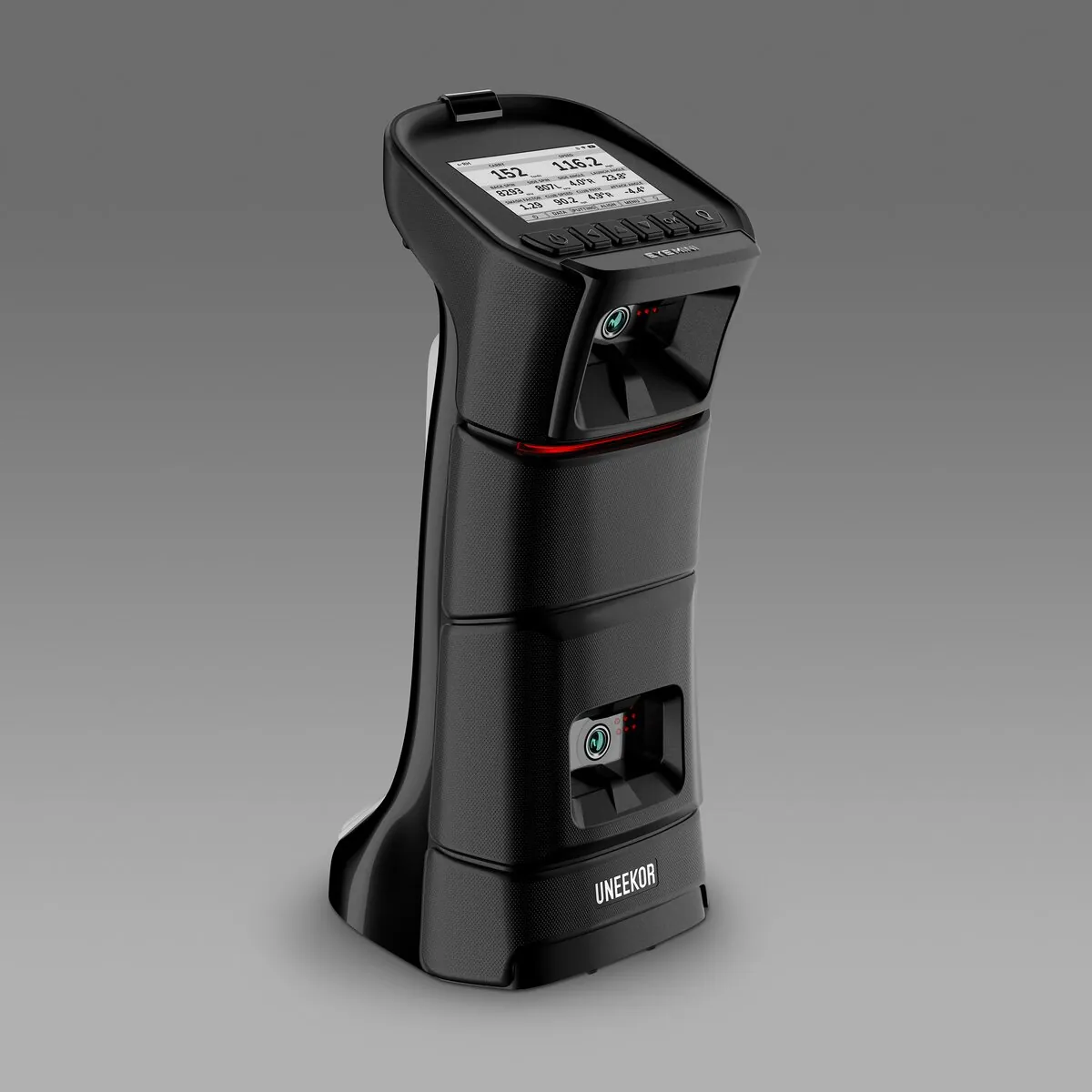
The Uneekor EYE MINI runs about $4,995. The Foresight GC3 runs $5,249. Both use high-speed cameras. Both measure spin directly — no estimation. Both are portable. Both are good enough for serious practice and simulator play.
But they’re built by different companies with different philosophies, and the differences show up in ways that matter once you’re actually using the thing every day.
Breakdown time.
The Technology: Same Idea, Different Execution
Both units are photometric — they use high-speed cameras to capture the ball in the first few inches after impact and measure spin, launch angle, ball speed, and spin axis directly. Not estimated from flight. Measured.
Foresight GC3 uses a Triscopic 3-camera system. Three cameras triangulate the ball from different angles. This is the same core technology Foresight uses in their $14,000 GCQuad. The GC3 is essentially the GCQuad with one fewer camera and a lower price tag.
Uneekor EYE MINI uses dual high-speed cameras with Uneekor’s patented Dimple Optix technology. Instead of reading dots or markings on the ball, Dimple Optix reads the actual dimple pattern. This means you can use any golf ball — no marked balls, no special balls, no stickers on the ball itself.
That’s a real difference. With the GC3, you can use any ball for ball data, but club data requires reflective markers on the club. With the EYE MINI, ball spin is measured with any ball, but club data requires reflective stickers on the club shaft.
The Spec Sheet
| Feature | Uneekor EYE MINI | Foresight GC3 |
|---|---|---|
| Price | $4,995 (often $2,999 on sale) | $5,249 |
| Technology | Dual camera (Dimple Optix) | Triscopic 3-camera |
| Data points | 19 (ball + club) | Full ball + club |
| Hitting zone | 12“ × 8“ | 7“ × 10“ |
| Ball type | Any ball (no marking) | Any ball |
| Club data | Reflective stickers required | Markers required |
| Display | None (requires PC/tablet) | Transflective LCD touchscreen |
| Battery | 6–8 hours | 5–7 hours |
| Weight | 7 lbs | 5 lbs |
| Outdoor use | Yes (limited) | Yes (transflective screen) |
| Software included | VIEW (basic); Refine/AI Trainer sold separately | FSX Play + FSX 2020 + 25 courses |
| Subscription | Tiers for advanced features | None required |
| Connectivity | USB | USB-C, WiFi, Ethernet |
| PC required | Yes (Windows) | No (built-in display) |
Where the GC3 Wins
Software included out of the box
This is the biggest difference. The GC3 ships with FSX Play and FSX 2020, plus 25 courses. You open the box, plug it in, and you’re playing golf. No extra purchases. No subscription. No PC required — the GC3 has its own transflective display.
The EYE MINI ships with Uneekor’s VIEW software for basic data display. To get simulator play, you need GSPro or E6 Connect — both of which require a Windows PC and cost extra. The AI Trainer and Refine software are additional purchases on top of the hardware.
If you want to play Pebble Beach on day one without buying anything else, the GC3 is the answer.
Outdoor visibility
The GC3’s transflective LCD screen is designed to be readable in direct sunlight. You can take it to the range, set it up, and actually read the numbers. The EYE MINI has no built-in display — you need a phone or tablet, and in bright sun, that screen washes out.
Lighter and more portable
5 lbs vs 7 lbs. Doesn’t sound like much until you’re carrying it in a golf bag up three flights of stairs.
No PC required
The GC3 runs its own software on its built-in display. You can use it standalone for practice. The EYE MINI requires a Windows PC for everything beyond basic data display.
Where the EYE MINI Wins
Price
$4,995 vs $5,249 — and the EYE MINI goes on sale regularly at $2,999. That’s a $3,000 difference when the EYE MINI is discounted. Three thousand dollars buys a lot of enclosure, projector, and hitting mat.
Larger hitting zone
12“ × 8“ vs 7“ × 10“. The EYE MINI’s hitting zone is significantly larger, which means less frustration when you’re hitting off a real mat and not perfectly centered every time. The GC3’s smaller hitting zone is a real annoyance for high-handicap golfers who don’t tee the ball in the exact same spot every swing.
Any ball, no marking
Dimple Optix reads the ball’s dimples. You grab any Titleist, any Callaway, any Kirkland from your bag and hit it. The GC3 reads any ball for ball data too, but for full spin accuracy, some users report better results with marked balls depending on conditions.
Deeper data points
19 data points vs the GC3’s standard ball + club set. The EYE MINI includes detailed putting analysis data that the GC3 doesn’t offer without add-ons. If you’re a data nerd — and if you’re spending $5K on a launch monitor, you probably are — the EYE MINI gives you more to dig into.
Third-party software flexibility
The EYE MINI works with GSPro, E6 Connect, and TGC 2019. The GC3 works with FSX (included) and also supports GSPro and E6. Both have options, but the EYE MINI’s community has built extensive GSPro integration that some users prefer over FSX’s more locked-down ecosystem.
The Hitting Zone Problem
This deserves its own section because it’s the most under-discussed difference.
The GC3’s hitting zone is 7“ × 10“. That’s a rectangle roughly the size of a piece of paper. You place the ball in that zone, and the cameras read it. Miss the zone and you get nothing — or worse, you get bad data that looks real.
The EYE MINI’s hitting zone is 12“ × 8“. That’s about 70% larger. For a mid-handicap golfer who doesn’t have Tour-level ball-striking consistency, this matters. A lot.
If you’re a 10 handicap or better, the GC3’s zone is fine — you center the ball, you hit it, it reads. If you’re a 15+ handicap who sometimes hits it off the toe, off the heel, or slightly behind the ball, the EYE MINI’s larger zone means fewer “no read” shots and less frustration.
Software Cost Over 3 Years
The total cost picture gets interesting over three years.
| Cost | Uneekor EYE MINI | Foresight GC3 |
|---|---|---|
| Hardware (MSRP) | $4,995 | $5,249 |
| Simulator software | $0–$500 (GSPro/E6) | $0 (included) |
| Year 1 total | $4,995–$5,495 | $5,249 |
| Year 2–3 software | $0 (GSPro is free for basic) | $0 |
| 3-year total | ~$4,995–$5,495 | ~$5,249 |
The EYE MINI is cheaper at MSRP, but if you buy E6 Connect ($300–$500) for simulator play, the gap narrows. If you use the free GSPro community edition, the EYE MINI stays cheaper. If you want the Refine AI Trainer, that’s an additional purchase that pushes the EYE MINI past the GC3’s total cost.
Who Should Buy the GC3
Buy the Foresight GC3 if:
- You want software included and don’t want to deal with a PC setup
- You practice outdoors (range sessions in sunlight)
- You want the Foresight brand reputation (tour fittings, fitting-grade accuracy)
- You value portability (lighter, built-in display, no PC tether)
- You want the simplest plug-and-play experience
The GC3 is the “I don’t want to think about it” choice. Open box. Turn on. Play golf. That simplicity is worth $1,000 to some people. Totally valid.
Who Should Buy the EYE MINI
Buy the Uneekor EYE MINI if:
- You want the lowest price for premium camera accuracy (especially on sale at $2,999)
- You’re a mid-to-high handicap golfer who needs the larger hitting zone
- You already have a Windows PC and don’t mind the setup
- You want GSPro as your simulator platform
- You’re building a permanent indoor setup and portability doesn’t matter
- You want deeper data points, especially for putting analysis
The EYE MINI is the “I’ll spend the savings on a better enclosure and projector” choice. If you’re building a complete simulator bay and the $1,000–$3,000 savings goes toward a 4K projector and a premium Carl’s Place enclosure, that’s the smarter play.
The Real Answer
Both of these are excellent. Both measure spin. Both are portable. Both have strong software ecosystems. The decision comes down to two questions:
- Do you want software included out of the box? Yes → GC3. No → EYE MINI.
- Do you need a larger hitting zone? Yes → EYE MINI. No → GC3.
If you’re still stuck, here’s the tiebreaker: if the EYE MINI is on sale at $2,999 (it often is), buy it. A $3,000 savings is a complete enclosure, hitting mat, and projector. At MSRP, the GC3’s included software and simplicity make the $1,000 premium worth it.
Either way, you’re getting tour-level camera accuracy in a portable package. They’re the two best home launch monitors on the market — your only real question is which form factor fits your space and budget.
Read our full Foresight GC3 review or our Uneekor EYE MINI review. Still can’t decide? Check out our complete guide to home golf simulators for the full picture.
Need the full picture on costs? 5-Year Total Cost of Ownership → with software subscriptions, mats that wear out, and the hidden expenses nobody talks about.