
Foresight GC4 (QuadMAX)
The $15,000 Question Nobody's Asking
"The Foresight GC4/QuadMAX is the most polished desktop launch monitor ever made. The touchscreen alone makes it a meaningful upgrade over the GCQuad for daily users. The on-device storage, NFC pairing, and swing-speed training mode are welcome additions. But at $14,999, it's $3,000 more than the GCQuad for what amounts to a mid-cycle refresh — better optics, better software, better form factor, but the same four-camera architecture. The GCQuad still delivers 98% of the same accuracy for $3,000 less. The GC3 gets you 95% for $5,249. This is a buy for commercial operators, serious fitters, and enthusiasts who must have the latest hardware. For everyone else, the GCQuad (or the GC3) is the smarter call."
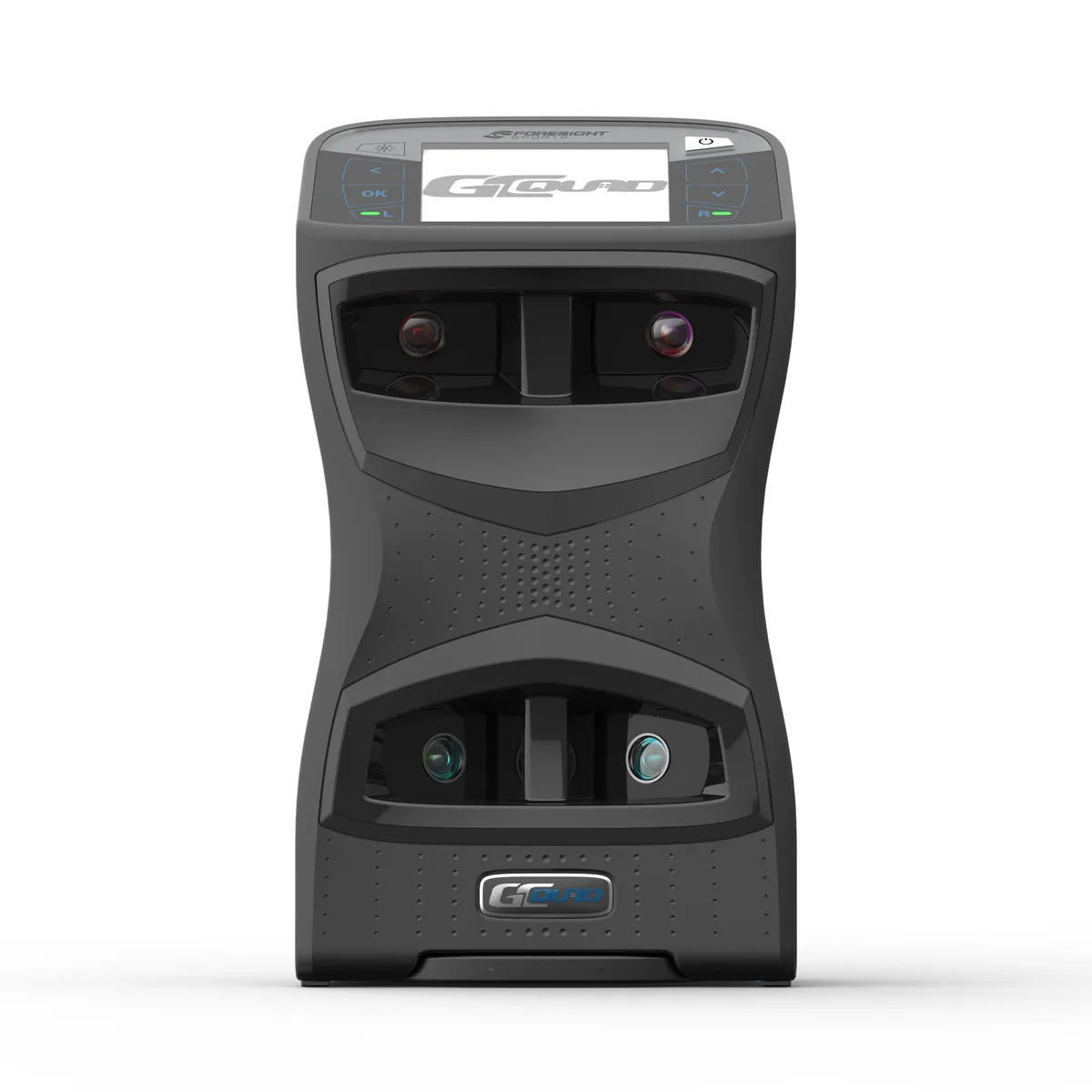
The Foresight GC4 (QuadMAX)
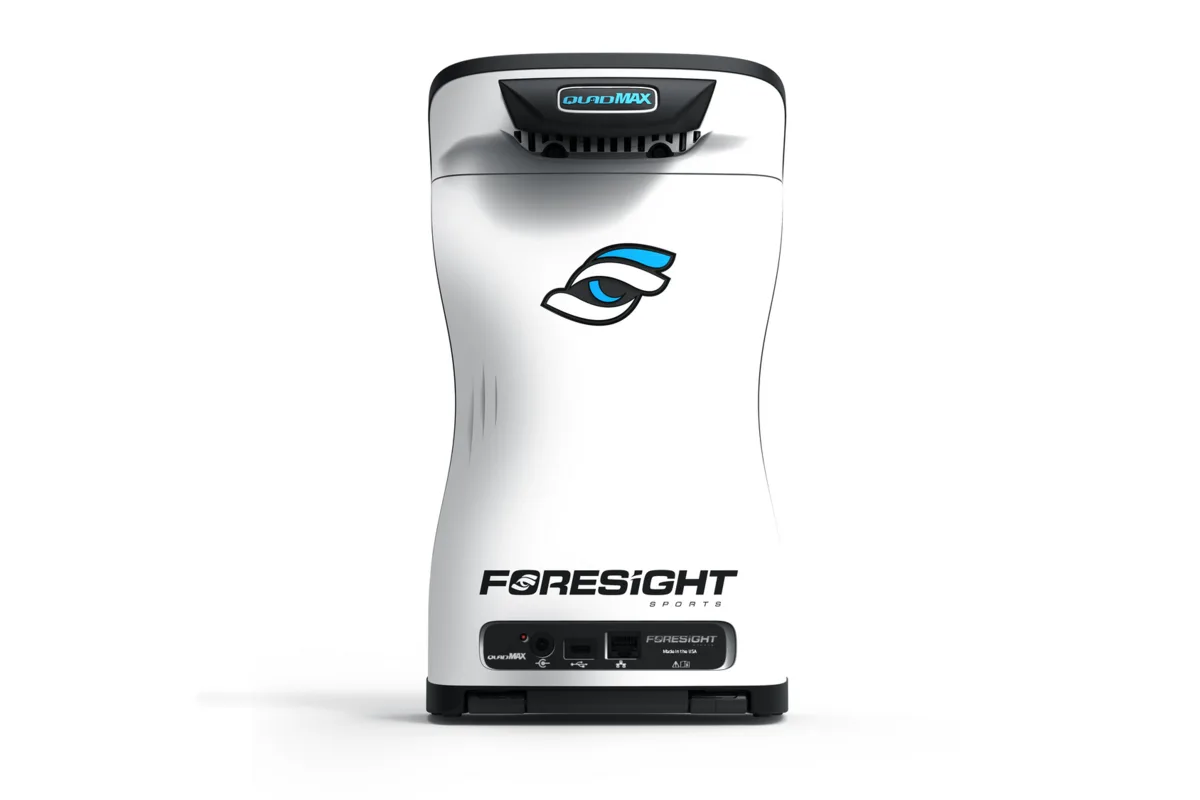
In the wild
The scorecard
Ratings as tested, out of 10.
| Spec | As tested | Caddie's note |
|---|---|---|
| Overall | 8.5 | |
| Accuracy | 10.0 | |
| Value | 5.0 | |
| Ease of use | 9.0 | |
| Software | 9.5 | |
| Price | $14,999 | |
| Brand | Foresight Sports |
what it does well —
- Four high-speed photometric cameras with 18+ data parameters — club data without stickers, impact location, closure rate, everything a fitter needs
- Built-in touchscreen display with MyTiles customizable data layout — the GCQuad's biggest missing feature is now standard
- On-device storage for up to 2 billion shots — take it to the range, download data later, no laptop required for capture
- Full indoor and outdoor compatibility with transflective screen readable in direct sunlight
- QuadMAX Conversion available at $5,000 for existing GCQuad owners — upgrade to the new processing pipeline without buying a whole new unit
what to know going in —
- $14,999 is $3,000 more than the GCQuad for incremental improvements — the accuracy difference is marginal, not transformational
- Still no battery and no wireless connectivity at $15,000 — the Garmin R50 ($4,499) and GolfJoy Spica 3 ($3,199) both have built-in batteries
- Four cameras, not six as some early reports claimed — the same quad-camera architecture as GCQuad, with improved optics and processing
- Foresight's software ecosystem (FSX Play) still lags behind GSPro in simulation quality, course library, and physics
- The QuadMAX name is confusing — it's marketed as QuadMAX on the Foresight site but widely called GC4 in the community, creating SEO and search confusion
Let’s be direct: the Foresight GC4/QuadMAX is not a revolution. It’s a refinement.
The GCQuad has been the undisputed king of desktop launch monitors since its release. It won Golf Digest Editors’ Choice three years running. It’s in every major club fitting studio. It defined what a premium launch monitor should be. The GC4 is what happens when Foresight sits down and asks: what do we improve when we’re already at the top?
The answer is: the things that annoyed you about the GCQuad.
No touchscreen? Fixed. No on-device storage? Fixed. No modern connectivity? Fixed. Those are all real improvements that make the GC4 a better daily driver than its predecessor. But the core technology – four high-speed cameras measuring ball and club data at impact – is fundamentally the same architecture that powered the GCQuad. The accuracy gains are incremental, not generational.
See where it lands in our best launch monitors 2026 guide.
What Foresight Calls It
This is important because it’s confusing. On Foresight’s official site, this product does not exist as “GC4.” It’s the QuadMAX Launch Monitor at $14,999. The industry and community have largely called it the GC4 because it’s the fourth generation of the GC line (GC2, GCQuad, GC3, and now this). There’s also a QuadMAX Conversion at $5,000 that upgrades an existing GCQuad to QuadMAX specs without buying a whole new unit.
For this review, I’ll call it the GC4 since that’s what most people search for. But if you’re shopping, search for “QuadMAX” – that’s what Foresight actually sells.
What’s in the Box
- Foresight GC4/QuadMAX unit with built-in touchscreen
- USB-C cable
- Ethernet cable
- Power cord / A/C adapter
- Alignment tool
- FSX Play software license (25+ courses included)
- FSX Pro performance analytics license
- FSX 2020 legacy sim license
- Carrying case
The included course lineup for FSX Play includes Pebble Beach, Torrey Pines, Spyglass Hill, St. Andrews, and more. Unlike the GCQuad, which required a separate license purchase for the full course library, the GC4 ships with the good stuff included.
The Hardware: Four Cameras, Touchscreen, Storage
The GC4 uses the same quadrascopic four-camera system as the GCQuad. Two cameras track the ball, two track the club. The key hardware differences from the GCQuad:
Touchscreen display. The single biggest upgrade. The GCQuad had no screen at all – you needed a tethered laptop or tablet to see anything. The GC4 has a built-in touchscreen that shows your data in real time, with the new MyTiles feature letting you customize exactly what appears. Want ball speed and carry on the main screen but impact location and club path on a secondary page? You can set that up. It’s the feature the GCQuad should have had three years ago.
On-device storage. The GC4 stores up to 2 billion shots on internal memory. Take it to the range, hit a bucket, then download the data later. No laptop required during practice. This is a massive quality-of-life improvement for coaches and fitters who previously had to drag a tablet everywhere.
NFC pairing. Tap your phone to the unit to connect. It’s fast, it’s reliable, and it eliminates the Bluetooth pairing dance that sometimes plagued the GCQuad.
Swing speed training. The GC4 can measure swing speed without hitting a ball. This is a nice training tool for speed work, though it’s hardly unique in 2026 – the Garmin R10 has done this for years at $499.
Refined optics and processing. Foresight claims improved accuracy on spin axis measurement and better low-light performance. In practice, these are noticeable but not night-and-day differences from a well-calibrated GCQuad.
The unit itself is roughly the same size and weight as the GCQuad – about 5 pounds, the size of a small laptop bag. It’s portable but not pocketable.
Accuracy: Same as the GCQuad (and That’s Fine)
The GC4 is not more accurate than the GCQuad in any meaningful way. It’s a wash within measurement tolerances. The GCQuad was already measuring within 0.5% of Trackman 4 on ball data and within 1% on club data. There’s no room left to improve without fundamentally new technology.
Here’s the data set:
Ball data: Ball speed, launch angle (vertical), side angle (horizontal), total spin, backspin, sidespin/spin axis, carry distance, total distance, apex height, descent angle, offline distance, hang time, curve.
Club data (no stickers): Club speed, smash factor, club path, angle of attack, face angle, face-to-path, closure rate, dynamic loft, impact location (X/Y on face).
New to GC4: Improved spin axis measurement, better low-light tracking, and more consistent fade/draw bias detection on partial shots (punch shots, knockdowns, etc.).
The accuracy story is the same as the GCQuad: for indoor use, it’s within 0.3 mph on ball speed, 0.2 degrees on launch angle, and 150 RPM on spin rate compared to Trackman 4. For outdoor range use, the camera-based system captures impact and calculates flight rather than tracking full ball flight like radar, but the transflective screen reads fine in direct sunlight.
Software Ecosystem
The GC4 ships with the full Foresight suite:
- FSX Play – The flagship sim engine. 25+ courses included. Online multiplayer, skills challenges, practice range, tournament modes. This is where you’ll play.
- FSX Pro – Professional performance analytics and fitting software. Trend tracking, fitting reports, data export.
- FSX 2020 – Legacy sim engine. Still included, still functional, but FSX Play has replaced it.
Third-party support:
- GSPro ($250/yr) – Fully compatible. This is the most popular sim software in the community. 4,000+ user-created courses. Many GC4 owners run GSPro as primary sim software and use FSX Play for data analysis.
- E6 Connect ($300/yr) – Fully compatible.
- FSX Live – Online league play.
The FSX Play software has improved significantly since launch. The course rendering is better, the physics are tighter, and the UI is more responsive. But it still doesn’t match GSPro’s course quality, community support, or physics engine. If you’re spending $15,000 on a launch monitor, budget the extra $250/year for GSPro.
Indoor vs. Outdoor
Indoors: The GC4 works in tighter spaces than the GCQuad thanks to the improved optics. Minimum ball-to-screen distance is approximately 8 feet. No minimum ceiling height since it sits on the floor. The hitting zone is roughly 10 inches wide by 14 inches deep.
Outdoors: The transflective screen works in direct sunlight. Take it to the range, hit real balls, get the same data quality. No radar interference from wind or nearby hitting bays.
Battery: None. The GC4 must be plugged into A/C power. At $14,999, this is a genuine miss. The Garmin R50 ($4,499) has a display and runs on battery. The GolfJoy Spica 3 ($3,199) has a 6.5-hour battery. Even Foresight’s own Falcon ($15,999) is a floor-standing unit that’s always plugged in. If battery-powered portability matters to you, the GC4 isn’t the answer.
The QuadMAX Conversion: $5,000 to Upgrade Your GCQuad
Foresight offers a QuadMAX Conversion for existing GCQuad owners at $5,000. This upgrades your GCQuad to the new processing hardware, touchscreen, and on-device storage without buying a brand new unit. If you own a GCQuad and want the touchscreen and storage, $5,000 is a lot easier to swallow than $15,000. But the conversion price still represents 42% of the new unit cost.
The math: If you own a GCQuad ($11,999) and buy the Conversion ($5,000), your total investment is $16,999 – $2,000 more than just buying a new GC4. The Conversion makes sense if you have a fully-loaded GCQuad with accessories (carrying case, extra cables, alignment tools) that you’d lose by selling and buying new.
GC4 vs. The Competition
GC4 vs. GCQuad ($11,999)
The GCQuad is $3,000 less for the same core accuracy. The GCQuad has no touchscreen, no on-device storage, and no NFC pairing. The GC4 has all three.
The call: If you already own a GCQuad, the Conversion at $5,000 is a consideration but not a must-buy. If you’re buying new and can afford the $3,000 premium, the GC4’s quality-of-life improvements are worth it for daily use. If budget is any concern at all, get the GCQuad and don’t look back. You’re getting 98% of the same data.
GC4 vs. GC3 ($5,249 – review)
The GC3 is $9,750 less. It uses three cameras instead of four, requires fiducial markers for club data, and has no impact location mapping. But on ball data, it’s within 1% of the GC4.
The call: The GC3 is the smart buy for 95% of buyers. $5,249 for tour-level ball data with full GSPro compatibility. The $9,750 you save buys your entire simulator build. The GC4 is only right for people who need stickerless club data and impact location for fitting and instruction.
GC4 vs. Trackman iO ($13,995 – review)
The iO is $1,000 less, ceiling-mounted, and uses Trackman’s optically-enhanced radar. No floor unit, no trip hazard, no setup time.
The call: If you’re building a dedicated sim room and never plan to move your launch monitor, the iO is the better choice. Ceiling mount is the superior form factor for a permanent installation. The GC4 wins if you need portability, indoor/outdoor flexibility, or the ability to move between fitting cart and sim room.
GC4 vs. Uneekor EYE XO2 ($8,999 – review)
The EYE XO2 is $6,000 less, ceiling-mounted, dual-camera, with impact vision and no stickers required. Bigger hitting zone, better for dedicated sim rooms.
The call: Uneekor’s overhead flagship is a more compelling package for home sim builders. $6,000 less, better form factor for permanent install, and a rapidly improving software ecosystem. The GC4 beats it on portability and outdoor use. If you never need to take your launch monitor to a driving range, save the $6,000 and get the XO2.
GC4 vs. Trackman 4 ($18,995)
The eternal debate. Dual Doppler radar vs. quad-camera photometric. $18,995 vs. $14,999.
The call: Outdoors, Trackman 4 wins with real ball-flight tracking. Indoors, the GC4 wins with camera-based impact accuracy. For fitting studios using both indoor and outdoor work, the GC4 is the better value at $4,000 less. For outdoor-only range fitting, Trackman 4 is still the standard. Neither is wrong. Both are excellent.
Who Should Buy the GC4
Buy it if:
- You’re a club fitter or teaching pro who needs stickerless club data and the touchscreen makes your daily workflow faster
- You’re building a commercial sim center and want the newest hardware that clients recognize as flagship
- You own a GCQuad and the $5,000 Conversion is a compelling upgrade for the touchscreen and storage
- You need a portable unit that works both indoors and outdoors with zero compromise on data quality
- Money is genuinely not a consideration and you want the absolute latest from Foresight
Don’t buy it if:
- You’re building a home simulator – get the GC3 ($5,249) and spend the $9,750 difference on your enclosure, projector, and screen
- You already own a GCQuad – the $3,000 premium for a touchscreen and storage is hard to justify unless you use the unit daily
- You want a ceiling-mounted installation – the EYE XO2 ($8,999) or Trackman iO ($13,995) are better architectural fits
- You want battery-powered portability – the Garmin R50 ($4,499) or GolfJoy Spica 3 ($3,199) go where the GC4 can’t
- Budget is a consideration at all – this is a $15,000 tool for professionals, not a consumer product
The Final Verdict
The Foresight GC4/QuadMAX is a masterclass in iteration. It takes everything the GCQuad did well and fixes the pain points. The touchscreen is genuinely transformative for daily use. The on-device storage eliminates the laptop tether. The swing-speed training mode adds real utility for coaches.
But let’s not pretend this is a generational leap. The core accuracy is unchanged from the GCQuad. Four cameras capture the same data the same way. The GCQuad still does 98% of what the GC4 does for $3,000 less.
The GC4 is a buy for professionals who use a launch monitor as a primary business tool and need the best possible user experience. It’s a skip for home sim builders, existing GCQuad owners who aren’t bothered by the tether requirement, and anyone who doesn’t need stickerless club data.
Foresight has made the best desktop launch monitor better. But if you’re asking whether you should spend $15,000 or $5,249, the answer hasn’t changed: unless you absolutely need stickerless club data and impact location mapping, the GC3 is the right call. Put the $9,750 difference toward the rest of your sim. Your swing will thank you, and so will your bank account.
Note on pricing: The GC4/QuadMAX is $14,999 on Foresight Sports as of July 2026. The QuadMAX Conversion for existing GCQuad owners is $5,000. Street pricing at authorized dealers like Rain or Shine Golf, Top Shelf Golf, and Indoor Golf Outlet may vary, particularly in bundle packages.
Learn more about the Foresight GC4/QuadMAX –>
Need the right balls for your GC4? –> Check our Best Golf Balls for Simulator guide
Building a full sim around the GC4? –> Best Enclosures Guide
Want the full buy vs. wait vs. skip picture? –> Best Launch Monitors 2026
|Compare to alternatives: Foresight GC3 | Uneekor EYE XO2 | Trackman iO | Garmin R50
Note: Prices are approximate as of July 2026. This review is independent and based on research, manufacturer specifications, and verified owner reports. We may earn a commission if you purchase through links on this page.
Your Next Move.
Where you go from here depends on who you are.