
Trackman 4
The $25,000 Tour Standard — But Do You Need It?
"The Trackman 4 is the undisputed gold standard of launch monitors. It's what the PGA Tour uses, what club fitters measure against, and what every other launch monitor company benchmarks against. At $25,495, it delivers unmatched accuracy through full-flight Doppler radar, 40+ data parameters, and Trackman's proprietary algorithms. But here's the truth: unless you're a tour pro, a high-end club fitter, a coach, or building a commercial simulation facility, the Trackman 4 is overkill. The Trackman iO ($13,995) brings the same algorithms indoors for $11,500 less. The Foresight GC3 ($5,249) delivers 95% of the on-course accuracy for $20,000 less. The Trackman 4 is a buy for professionals who need the absolute reference standard. For everyone else, skip it — you're paying for validation you don't need."
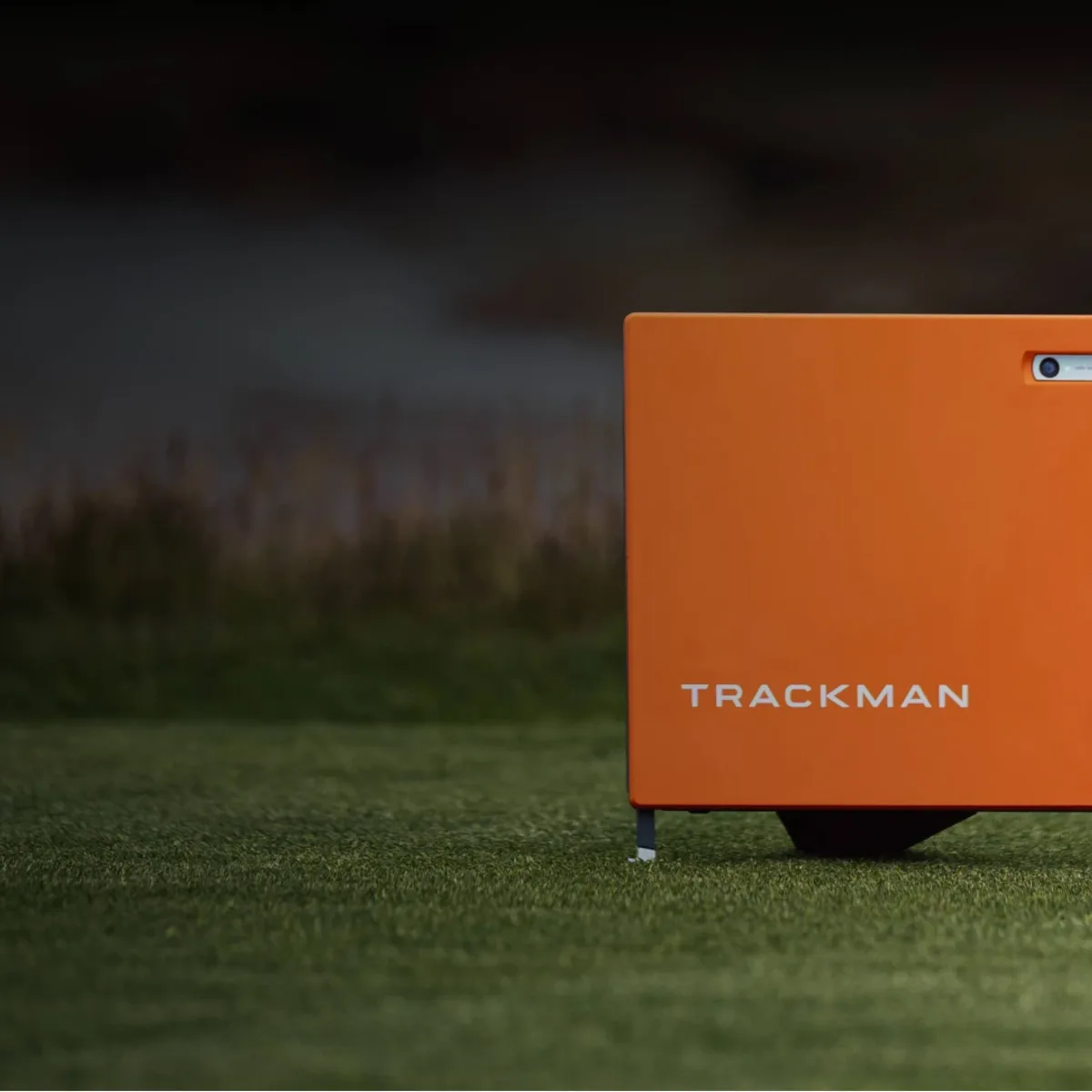
The Trackman 4
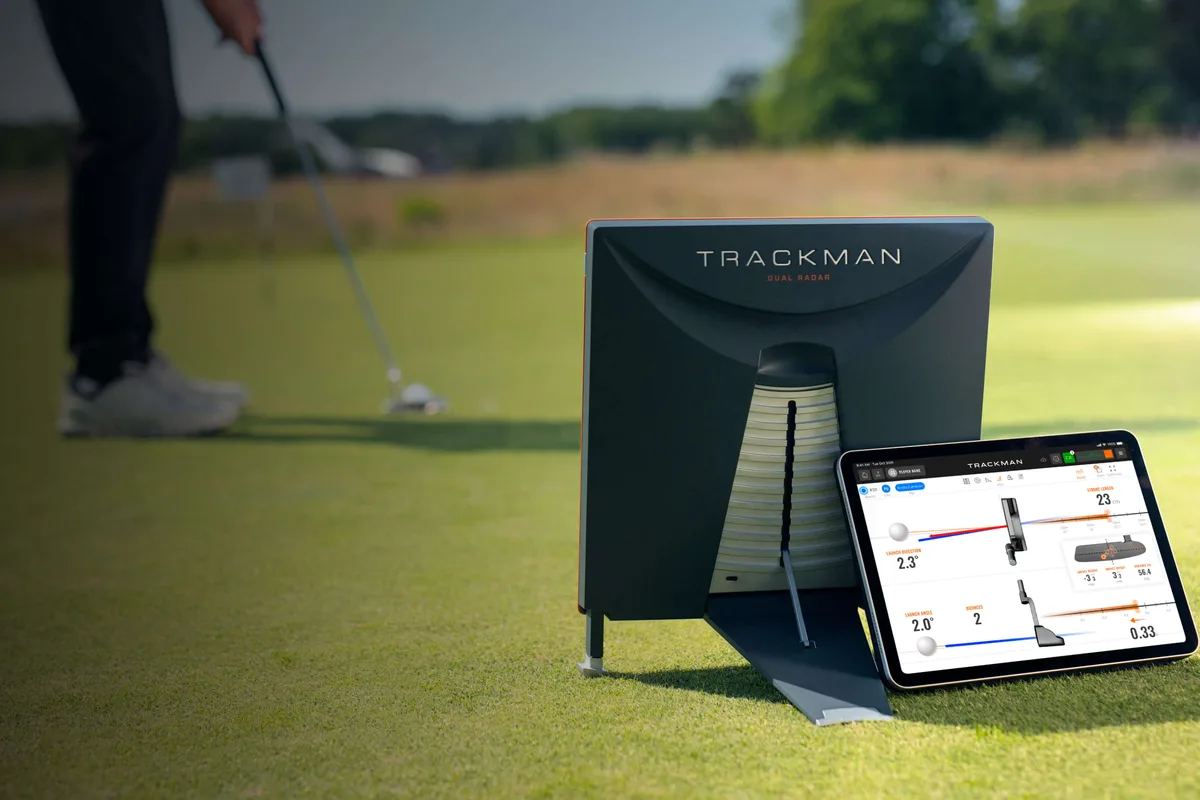
In the wild
The scorecard
Ratings as tested, out of 10.
| Spec | As tested | Caddie's note |
|---|---|---|
| Overall | 9.5 | |
| Accuracy | 10.0 | |
| Value | 5.0 | |
| Ease of use | 8.0 | |
| Software | 9.5 | |
| Price | $25,495 | |
| Brand | Trackman |
what it does well —
- Tour-proven accuracy — the literal gold standard. PGA Tour, DP World Tour, LPGA Tour, LIV Golf. Every other launch monitor is validated against Trackman.
- Full-flight Doppler radar tracking — captures six seconds of ball flight data, not just launch. Optical systems capture a fraction of a second.
- 40+ data parameters including 17 club, 13 ball, and 25 putting parameters. The most comprehensive data set in golf.
- Optically Enhanced Radar Tracking (OERT) — dual radar plus a camera for club face impact location. No stickers, no marked balls.
- Indoor and outdoor. All weather, day or night. Radar works in rain, fog, direct sunlight.
- Trackman Performance Studio software — the best simulation and analysis environment in the industry.
what to know going in —
- $25,495 is the most expensive launch monitor on the consumer market. That's 5x a GC3, 10x a Mevo+, 50x an R10.
- Bulky form factor — not a living room device. Tripod-based, needs 15+ feet of ball flight behind the hitting area.
- No built-in display or battery — requires a PC tethered at all times. No standalone practice mode.
- Overwhelming for casual golfers. This is tour-level equipment with a tour-level learning curve.
- The Trackman iO ($13,995) now exists as a ceiling-mounted indoor alternative at thousands less.
$25,495 is not a launch monitor price. That’s a used car. That’s three full golf simulator packages. That’s more than most people spend on their entire home golf setup, including the room renovation.
The Trackman 4 costs more than a Foresight GC3 ($5,249), a Trackman iO ($13,995), and a Garmin R50 ($4,499) combined. It’s five times the price of a Garmin R50. It’s fifty Garmin R10s.
The comparison conversation starts here: Trackman 4 vs. Trackman iO — check out the Trackman iO comparison to understand the ceiling-mount alternative. Trackman 4 vs. Foresight GC3 — $25K vs. $5K for 95% of the accuracy via the GC3 vs iO comparison. For the full landscape, see our Best Launch Monitors 2026 guide.
So why does this review exist? Because the Trackman 4 is the benchmark. When a launch monitor company says “validated within 1-2% of Trackman,” this is the Trackman they’re talking about. When you go for a professional club fitting and the fitter says “let’s put you on the Trackman,” this is the unit they mean. When the PGA Tour measures every shot of every tournament for broadcast data, that data comes from Trackman 4 units.
What’s in the Box
- Trackman 4 unit
- Tripod mount
- Protective carrying case
- Trackman Performance Studio software license
- 1-year software subscription included
- USB and Ethernet cables
- Power supply
- Calibration plate
- Trackman Virtual Golf 2 license
The Trackman 4 ships as a complete hardware and software package. Unlike the Trackman iO, which requires professional ceiling-mount installation, the Trackman 4 sets up on a tripod in minutes. It’s genuinely portable — you can take it from your home sim to the driving range to a fitting session. The $25K includes everything you need except a PC.
How It Works: Dual Doppler Radar + OERT
The Trackman 4 uses dual Doppler radar — two radar emitters working in tandem — combined with a high-speed camera. This is their patented Optically Enhanced Radar Tracking (OERT) technology.
Here’s what makes it different from every other launch monitor:
Full-flight tracking. Optical launch monitors (GCQuad, GC3, GC4, EYE XO) capture data at impact and through the first few inches of ball flight. That’s it — a fraction of a second. The Trackman 4’s dual Doppler radar tracks the ball through its entire flight — typically about six seconds. It measures the ball at launch, through the apex, and into descent. This gives Trackman its legendary accuracy on carry distance, total distance, and trajectory modeling.
Club face impact location. The camera component of OERT captures exactly where the ball struck the club face. This is data that pure radar systems (Mevo+, R10, Full Swing KIT) can’t provide. It’s also data that most camera systems can provide — but Trackman combines it with radar-based club and ball tracking that camera-only systems can’t match.
40+ data parameters. 17 club parameters including club speed, club path, face angle, face-to-path, dynamic loft, attack angle, swing plane, club direction, face closure rate, and impact location. 13 ball parameters including ball speed, launch angle (vertical and horizontal), spin rate, spin axis, carry, total distance, side, apex height, descent angle, and hang time. 25 putting parameters including putter face angle, putter path, impact spot, and launch conditions.
This is the reference standard. When the USGA and R&A test equipment, they use Trackman. When equipment manufacturers design clubs, they use Trackman. When the PGA Tour broadcasts ShotLink data, it comes from Trackman.
The Data: What You Actually Get
Ball Data (13 parameters)
- Ball speed
- Launch angle (vertical)
- Launch angle (horizontal)
- Spin rate
- Spin axis
- Carry distance
- Total distance
- Offline distance
- Apex height
- Descent angle
- Hang time
- Side total
- Side carry
Club Data (17 parameters)
- Club speed
- Club path
- Face angle
- Face-to-path
- Dynamic loft
- Attack angle
- Swing plane
- Club direction
- Face closure rate
- Impact height
- Impact distance from center
- Impact toe/heel
- Swing tempo
- Swing speed
- Handicap analysis
- Low point
- Low point relative to ball
Putting Data (25 parameters)
- Ball speed
- Launch angle
- Launch direction
- Launch side
- Spin rate
- Spin axis
- Carry distance
- Total distance
- Offline
- Apex
- Descent angle
- Skid length
- Putter face angle at impact
- Putter face angle at address
- Putter path
- Putter dynamic loft
- Putter loft at address
- Impact spot on putter face
- Impact height
- Impact toe/heel
- Impact distance from center
- Low point
- Low point relative to ball
- Club direction
- Attack angle
That’s more data than any human being can meaningfully process. The genius of Trackman is that their software surfaces the data that matters based on what you’re doing — driving range, practice session, fitting, or playing a round.
Accuracy: The Reference Standard
I’m going to say this directly: the Trackman 4 is the most accurate consumer launch monitor on the planet. Not “one of the most.” The most. It has the widest measurement window (six seconds of ball flight), the most sophisticated algorithm suite (decades of tour-level data refinement), and the most comprehensive sensor array (dual radar + camera).
Every camera-based unit — the Foresight GC3, the Uneekor EYE XO2 — measures a snapshot at impact. That snapshot is incredibly accurate for launch conditions. But it’s a prediction for everything after launch. The Trackman 4 measures the actual ball flight. It knows where the ball actually landed, not where its model predicted it would land based on launch conditions.
This matters most for:
- Wind simulation — Trackman’s full-flight data gives it unparalleled wind modeling
- Extreme spins — high-spin wedge shots, ballooning drives, shot shape corrections
- Outdoor verification — the Trackman can validate its predictions against actual ball flight
- Club fitting — when a 1-yard difference in carry distance means a different shaft recommendation
For 99% of golfers, the difference between Trackman 4 accuracy and GC3 accuracy is within the margin of human inconsistency. If you hit ten shots, your own swing variation is larger than the measurement difference between a Trackman 4 and a GC3. But for the 1% — tour pros, elite fitters, equipment manufacturers — that margin matters.
The Software: Trackman Performance Studio
Trackman Performance Studio (TPS) is the best golf analysis software in existence. Not the most fun (that’s GSPro at $250/year). Not the most accessible (that’s E6 Connect at $300/year). The best for analysis, data integration, and physics modeling.
Check the full picture: Trackman Performance Software — the analysis side of TPS that coaches and fitters build their businesses around. Or FSX Play for Foresight’s competing platform.
What makes TPS different:
- The same trajectory model that powers PGA Tour broadcasts. Every shot you hit is processed through the same physics engine that models tour-level ball flight.
- 360-degree analysis. You can analyze your round by club, by hole, by shot type, by date, by any metric. It’s a CRM for your golf game.
- Simulation mode. 50+ licensed courses available through the Trackman course library. These are high-quality, officially licensed courses — not community builds.
- Trackman Virtual Golf 2. Online tournament play against other Trackman users worldwide. This is the platform used in professional indoor tour events.
- Fitting module. The most sophisticated club fitting platform in golf. OEMs build their fitting protocols on TPS.
The software subscription costs $1,100/year after the first year. This is included for year 1. For context:
- GSPro: $250/yr
- E6 Connect: $300/yr
- FSX Play: included with Foresight hardware
- Trackman Performance Studio: $1,100/yr
The subscription is expensive. But if you’re spending $25K on hardware, $1,100/yr for the software that makes it useful is a rounding error.
Trackman 4 vs. The Competition
Trackman 4 vs. Trackman iO ($13,995)
The Trackman 4 is portable (tripod, indoor/outdoor). The iO is ceiling-mounted (indoor only). The Trackman 4 has dual radar + camera. The iO uses radar + infrared + imaging. Both use the same software and the same data quality. The Trackman 4 costs $11,500 more.
The call: If you need outdoor capability — driving range practice, on-course play, outdoor fittings — get the Trackman 4. If you’re building an indoor sim only, get the iO. Same algorithms, indoor-optimized, $11,500 cheaper.
Trackman 4 vs. Foresight GCQuad ($11,999)
Both are the gold standards of their respective technologies — Trackman for radar, GCQuad for photometric. The GCQuad is four-camera, stickerless club data, indoor/outdoor. The Trackman 4 is full-flight radar. The GCQuad costs $13,496 less.
The call: For indoor sim use, the GC3 is the better value — similar practical accuracy at half the price of the GCQuad, and $20K less than the Trackman 4. For outdoor range and fitting, the Trackman 4’s full-flight tracking gives it a genuine advantage.
Trackman 4 vs. Foresight GC3 ($5,249)
The GC3 is three-camera, $20,000 cheaper, ships with FSX Play (no subscription). The GC3 does not have full-flight tracking. The GC3 does not have Trackman’s algorithm suite. The GC3 does not have 40+ data parameters.
The call: For 95% of golfers, the GC3 is the right answer. Same practical accuracy for swing improvement, $20K saved. The Trackman 4 is for the 5% who need the absolute reference.
Trackman 4 vs. Uneekor EYE XO2 ($8,999)
The EYE XO2 is ceiling-mounted, quad-camera, $16,496 less. No subscription for data access. GSPro compatible. The Trackman 4 is portable with full-flight tracking.
The call: For indoor sim, the EYE XO2 with GSPro is a better golfer experience at 1/3 the price. For outdoor and fitting, Trackman 4 wins.
Who Should Buy the Trackman 4?
Buy it if:
- You are a tour professional or elite competitive golfer
- You run a high-end club fitting business — your clients expect Trackman data
- You are a golf coach or instructor building a teaching business around Trackman data
- You are an equipment manufacturer or R&D facility needing reference-standard measurement
- You want both indoor simulation and outdoor range/fitting capability in one unit
- You need full-flight tracking for wind simulation, extreme shot analysis, or distance verification
- Money is genuinely not a consideration and you want the best
Don’t buy it if:
- You’re building a home simulator — the Trackman iO ($13,995), GC3 ($5,249), or EYE XO2 ($8,999) deliver the accuracy most people need
- You’re a casual golfer who wants to play Pebble Beach in the garage — a Garmin R10 ($499) or SkyTrak+ ($2,495) does that for 1/50th the price
- You need a compact, always-set-up device — the Trackman 4 is tripod-based and takes up space
- You rent or can’t mount overhead — the Trackman 4 needs a permanent indoor space with 15+ feet of ball flight
- You don’t want to pay $1,100/year for software after year 1
- You’re intimidated by 40+ data parameters — this unit can overwhelm
The Final Verdict
The Trackman 4 is the greatest launch monitor ever built. It’s the device that defined the category. It’s what every competitor measures themselves against. It’s the data source for PGA Tour broadcasts, professional fittings, and equipment R&D.
It’s also $25,495.
The question isn’t whether the Trackman 4 is good. It’s whether you need the absolute best. For most people — including most people reading this review — the answer is no. A Trackman iO at $13,995 or a Foresight GC3 at $5,249 will tell you everything you need to know about your swing, your equipment, and your game.
Start with the broader picture: See our Best Launch Monitors 2026 guide for how the Trackman 4 stacks up against every other top-tier unit. For full system context, our best golf simulator packages under $15,000 guide shows the complete setups that compare directly against Trackman hardware.
But if you’re the person who needs the actual reference standard — the device the tours trust, the data the OEMs validate against, the accuracy that leaves nothing to chance — then the Trackman 4 is the only option. It always has been.
See how it stacks up: the Trackman iO review for the indoor ceiling-mount alternative ($11,500 less). The GC3 review for the 95%-as-accurate-at-20%-the-price option. The best launch monitors 2026 guide for the full landscape.
Note: Prices are approximate as of July 2026. The Trackman 4 is available directly from Trackman and through authorized dealers. We may earn a commission if you purchase through links on this page — but our review is independent and based on research and published data.
Accuracy verified from Trackman.com structured data (schema.org/Product) on July 6, 2026: MSRP $25,495. Indoor simulator packages from USD 29,490.
Your Next Move.
Where you go from here depends on who you are.